little lit book series: summer edition

Elisha Cooper’s Beach is summer encapsulated in his characteristic lovely and poetic watercolors.  For today’s #littlelitbookseries, we’re celebrating the upcoming warm and lax season of summer, the time where the pace of life slows down even just a little bit and we have more moments to sit and reflect on all that’s happened so far in the year.

“Away to the beach!  Away to sand and salt water, to rolling dunes and pounding waves.  Away to swimsuits and sunscreen, to lying on towels and listening to the sound of the ocean.  As the day begins, the beach is empty, waiting to be filled.“

Elisha Cooper on Beach: “I did most of the drawings for this book on Lake Michigan. Our home in Chicago was near the lake, and I’d go there with my daughters to play and swim, and sketch bathers. Since there are salty aspects to beaches, I flew back East and sketched seaweed and crabs. I remembered beaches I loved when I was young, from Fire Island to Cape Hatteras. Then I put all these sketches together into one summer day at the beach. So the beach in this book looks like the Hamptons but has Midwestern roots (the lighthouse here is at the head of the Chicago River). Even a city beach has details that make a beach a beach: sand, seagulls, and bathers in funny swimsuits.”

Take a look at everyone else’s summer posts in #littlelitbookseries on Instagram.
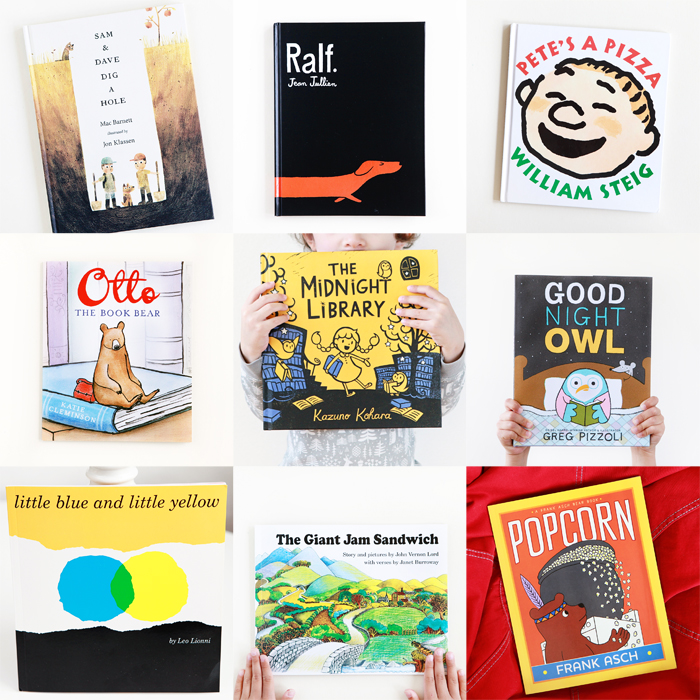
the importance of retelling stories

This collection of picture books has one thing in common: they are great books to start out with when you are teaching your little ones how to retell a narrative (aka storyline or plot).  As an SLP, one of my favorite tools for teaching how to retell narratives is Story Grammar Marker.  

It's important for kids to be able to retell stories because if they are able to do so, it shows that they are comprehending and remembering them.  In their school years, children take in new information and learn about the world through stories (and later, expository texts like science books).  The ability to retell or summarize is crucial and is something that children will use throughout their lives.  It's a skill that they will continue to build upon as they encounter more complex texts.  Practicing retelling stories also supports writing skills—when children internalize the structure of stories, it helps them organize events in a logical sequence when they take on writing tasks.  Also, while retelling stories, other areas are worked on such as vocabulary acquisition, past tense verbs and so much more.  It’s a worthwhile task to easily blend in with story time.

the airport book

Lately, Nate’s been asking where Florida, Paris and Hong Kong are.  He wants to visit Disneyland in each of those places and wants to go on each park’s version of the Haunted Mansion. lol  I’ve been telling him that they’re far away and that you have to take an airplane to get there, etc.  I’m not quite sure he understands because he’s never flown before.  So, enter The Airport Book.  I like all the of aspects of Lisa Brown’s newest work—the content, the color palette, her illustration style—but I love the design and composition of the page spreads the most.  She really captures the bigness and airiness of an airport, with its comings and goings and ubiquitous swarms of people.  When I first flipped through its pages, I had flashbacks of memorable times spent in airports—waiting, breathing in all the activity, getting lost in the sea of background noise, walking around and looking up at everything.  

 Back to the book—Nate likes all the dialogue between the family members and when we read it, he gets concerned about the whereabouts of the little girl’s monkey.  There are so many details to notice and get lost in on each page and I’ve been enjoying reading and re-reading the book with him.

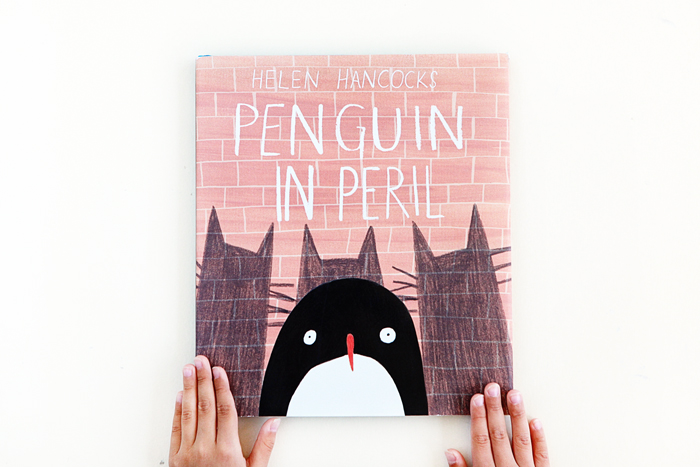
penguin in peril

There’s something about Penguin in Peril by Helen Hancocks that reminds me a little of a Wallace and Gromit short—a little dark, a little bit of intrigue, and very clever all around.  It’s great for teaching rare words “peril,” “cunning” and “foiled.”  

Rare words, according to Jim Trelease, are ones that kids won't typically hear in everyday conversation, but will encounter in books.  They occur not only in chapter books, but in picture books.  Many picture books are rich sources of rare words, diverse vocabulary and regional lexicon.  Are there any interesting rare words in your bedtime story tonight?  And please mention the title.  I'm always looking to increase the diversity of our book collection. 

what degas saw

What Degas Saw gives children insight into the quotidian inspiration that Degas found on the wide boulevards and narrow streets of Paris—its light, denizens, quiet corners and lively din.  “He wanted to find a way to capture the beauty of the passing moment. … All across busy Paris he studied movements of people at work and play.”  In his work, he strove to depict “the city’s push and pull, its run and jump, its lean and stretch. “

Words by author and MoMA curator Samantha Friedman, with aquatint etching illustrations by Cristina Pieronpan.  What Degas Saw accompanies an exhibition at MoMA entitled Edgar Degas: A Strange New Beauty.  It’s on view until July 24 for those of you NYC dwellers.