keats's neighborhood: an ezra jack keats treasury

I never knew this wonderful anthology existed until I saw it in @ohcreativeday's Instagram feed (Thanks, Shannon!).  Keats's Neighborhood: An Ezra Jack Keats Treasury is a collection of ten of his most notable works: The Snowy Day, Whistle for Willie, A Letter to Amy, Peter’s Chair, Goggles!, Jennie’s Hat, Hi, Cat!, Apt. 3, Louie’s Search and Pet Show!  Keats’s Neighborhood also features reflections on his work and insights into Keats's life, methods and legacy from five writers and illustrators who had the privilege of calling him their friend.  An excerpt from Anita Silvey's introduction:

“With nearly two million copies in print, ‘The Snowy Day’ alone would confirm Keats’s place in the pantheon of great children’s book creators.  To have made one of the two picture-book masterpieces of the early 1960s (the other being Maurice Sendak’s ‘Where the Wild Things Are’) would be enough of a legacy.  But by bringing multicultural publishing to the forefront of our consciousness, Keats has influenced children’s books for four decades.  Hence his achievements proved even greater than his books.

On the fortieth anniversary of ’The Snowy Day,’ children and adults alike can celebrate this giant, Ezra Jack Keats, and his accomplishments.  Because he could think with the mind of a child, children love his books.  Because he remained true to his convictions, adults admire his artistic integrity.  With great courage and in the face of adversity, Keats took the less-traveled, more difficult road—and that has made all the difference in children’s books.” 

it might be an apple

“One day, I came home from school.  On the table, there was an apple.  But wait a minute.  It might not be an apple after all… “

It Might Be an Apple is a thought-provoking book that doesn't take itself too seriously.  Shinsuke Yoshitake's charming philosophical musings pique a child's wonder and hold it captive long enough to engage it in some playful and intriguing ideas.  An amusing way to teach children to question the quotidian and the world around them.  Absolutely love this one!

ABZZz...

S is for soporific.  ABZZz… is a new take on the alphabet picture book by Isabel Minhós Martins and Yara Kono of Planeta Tangerina, and is the kind of innovative and design-centric picture book that this Portuguese publishing house is known for.  This is why I love them.  We’ve all had many a night where our kids fight going to bed.  Your kids won’t be able to resist this sleep-inducing book, in more ways than one.

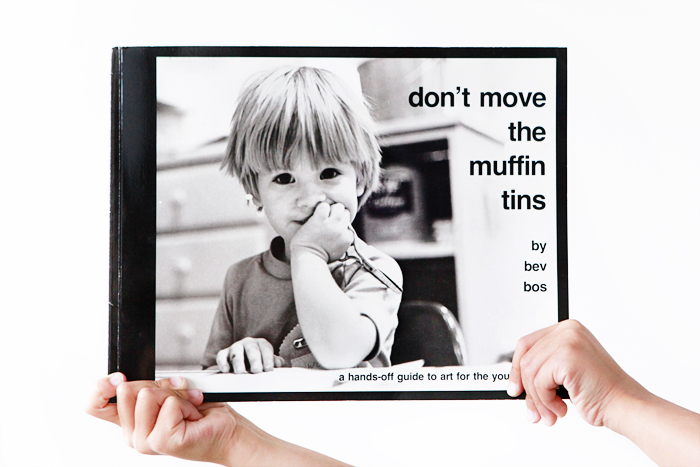
don't move the muffin tins

Bev Bos, who served as director of Roseville Community Preschool for almost 50 years, was an early childhood educator with incredible expertise about play-based learning, process art and developmentally-appropriate learning experiences for preschoolers.  There is no one in the field of early childhood who hasn’t been impacted by her work.  She was quoted as once saying, “The basics for young children are wonder, discovery and experience.  If it hasn’t been in the hand, the body and the heart, it can’t be in the brain.”

We have her seminal work on children and art: Don’t Move the Muffin Tins: A Hands-Off Guide to Art for the Young Child.  There is so much goodness in the book, too much to share in one post, so I’ll leave you all with some quotes and implore you to seek out a copy of Don’t Move the Muffin Tins for yourself.  I got this copy, used, years ago.  It’s out of print but shouldn’t be too hard to find.  Bev Bos will help you provide experiences for your child so that they can tap into their innate creativity through exploration and making their own choices.  It will teach you how to listen to your child in ways that you’ve never thought of.

“The young child grows from the head down and the midline out.  If we are in tune to the child’s growth, we know, for example, that a two-year-old will probably not paint or draw circles.  Does this mean a different set of activities for each age?  Certainly not.  We need only to learn to present materials and let each child develop an individual creativity.

Children need to please only themselves.  Does this mean the child can throw the paint?  Spill the glue?  Of course not.  I’m referring to basic use of art materials.  Once you’ve presented the materials, forget how *you* intended them to be used.  Sometimes it’s difficult.  You may have one end product in mind, but the child may have another idea.  If that’s the case, hands off!  It’s easier to observe this principle in art activity than in crafts because there is no right or wrong in art, of course, just creating.”